Why metro mayors
need to lead the
skills revolution

13 Feb, 26

Share

Words by Andy Clarke, Head of Strategic Partnerships at Ahead Partnership

The transfer of meaningful powers over local skills and apprenticeship planning to metro mayors is a chance to truly redesign the journey young people take from school into work. If these devolved responsibilities are used boldly, they can help prevent young people becoming Not in Education, Employment or Training (NEET) rather than responding after the damage is done. That preventive mindset is the difference between a system that manages problems and one that builds futures.

Rising NEET levels are set against a backdrop of severe pressure on schools and local authorities. Services are under increasing strain, and leaders are expected to navigate complex statutory guidance while lacking the capacity to design and deliver the long‑term, employer‑led engagement that keeps pupils motivated and informed.

However, metro mayors have an unprecedented opportunity to change that, creating coherent, region-wide approaches that remove strain from schools while strengthening the pipeline into growth sectors. Devolution gives them new levers, and the task now is to use those levers to truly embed prevention, rather than just focusing on provision.

As National Apprenticeship Week comes to a close, we’ve been reflecting on what genuine apprenticeship opportunity looks like for young people – and how devolution can help deliver it. That reflection is grounded in what we see every day at Ahead Partnership, having worked with more than 630,000 young people and over 4,000 employers.

The pattern is unmistakable. The earlier and more consistently you engage with a young person, the more likely you are to significantly alter the trajectory of their life. When pupils meet local employers from Year 8 onwards, when apprentices demystify what their roles actually involve, and when real labour‑market insight is brought into the classroom, confidence grows.

At the same time, misconceptions about apprenticeships fall away, and the connection between aspiration and actual local opportunity becomes tangible. Over time, this is what stops disengagement taking root, but it needs to be considered long before it shows up in attendance figures or post-16 destinations.

line
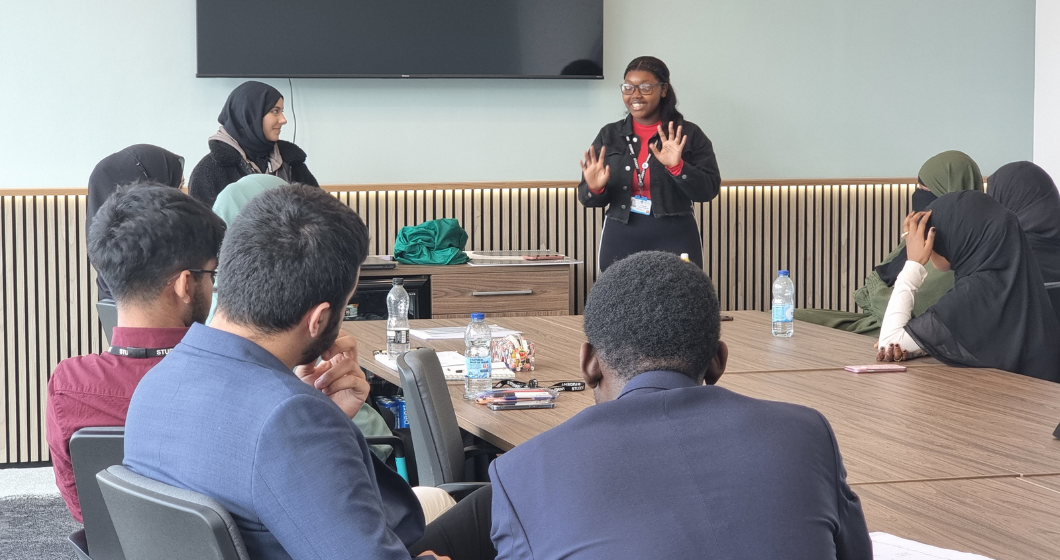
Students taking part in a presentation activity for Growing Talent Morley

We know how impactful this can be. In Morley, our Growing Talent programme has shown the power of connecting regeneration, employers and young people at a hyper‑local level: Every young person from the thousands that took part told us that the programme improved their perception of the career opportunities available on their doorstep. This outcome is crucial,  particularly in places where major investment is changing the built environment but young people can feel distant from its benefits.

When a town’s future is made tangible, regeneration stops being an abstract plan and becomes a shared social project. Teachers see greater motivation among students who rarely saw themselves reflected in high‑value sectors, and employers find a responsive, curious audience for the skills they need.

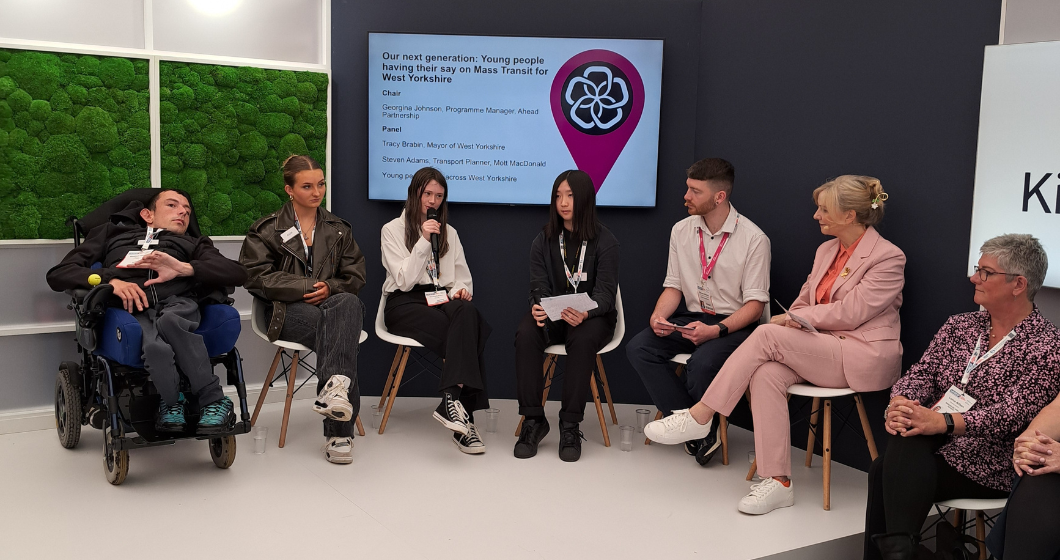
We’ve seen the same dynamic at work through our collaboration with West Yorkshire Combined Authority (WYCA) and Mott MacDonald on the region’s proposed mass transit system. Too often, large infrastructure schemes feel remote to the young people who will one day inherit them: the vocabulary is technical, the timelines are long, and the careers involved can seem out of reach.

And this kind of early engagement becomes even more important when major projects, such as mass transit, face uncertainty or delay. For metro mayors, maintaining momentum and public confidence in long‑term infrastructure – particularly when decisions taken in Westminster can alter timelines – is a real challenge. Sustained youth engagement helps keep the purpose and value of these schemes alive, ensuring that young people still see themselves in the region’s future even when delivery slows.

By translating the complexity of mass transit into accessible, hands-on encounters for schools and colleges, we watched students start to recognise engineering, design, planning and project management not as abstract professions, but as roles that are shaping the streets they use every day – and roles that they themselves could come to fill.

Pupils along proposed future transit corridors began to imagine themselves not just as passengers but as apprentices, technicians, surveyors and digital specialists with a stake in building West Yorkshire’s future. And because the work was rooted in the geography and identity of West Yorkshire, it carried a credibility that generic careers activities cannot match: young people could point at a map and say, I could help build that.

There’s a clear opportunity to build a skills system that feels honest about place, that recognises the strengths and constraints of a locality, and that invites young people to participate in shaping what comes next. Done well, this prevents disengagement, widens access to high‑value careers, and strengthens local labour markets with talent that is confident, capable and community-minded.

Andy Clarke, Head of Strategic Partnerships at Ahead Partnership

It’s vital that metro mayors understand that early, place-based skills and apprenticeship engagement is not a nice to have. It is the mechanism that converts devolution into outcomes. It gives mayors a route to reduce pressure on schools by coordinating employer access and it aligns young people’s understanding of career pathways with the skills and roles that local employers actually need.

To get there, we need to shift how success is measured and funded. Social value models should give clearer weight to prevention by rewarding early, sustained engagement that reduces the risk of NEET, rather than as well as rewarding interventions once problems crystallise.

Commissioners should prioritise partnerships that anchor employer encounters in regeneration plans and local industrial strategies, so young people see themselves as part of the future being built around them. And mayors should use their skills and apprenticeship powers to guarantee that pupils encounter apprentices and employers regularly from Year 8 onwards, not just at the point of choosing post‑16 pathways – as by this time, it’s often too late.

There’s a clear opportunity to build a skills system that feels honest about place, that recognises the strengths and constraints of a locality, and that invites young people to participate in shaping what comes next. Done well, this prevents disengagement, widens access to high‑value careers, and strengthens local labour markets with talent that is confident, capable and community-minded.

Devolution makes this possible. But the real transformation will only come when metro mayors use their powers not just to manage numbers, but to change experiences, ensuring that young people understand the opportunities available to them early enough to actively pursue them,

At Ahead Partnership, we’ve seen what works. Growing Talent Morley showed how quickly perceptions shift when regeneration is made relevant, and our work with WYCA and Mott MacDonald proved that complex infrastructure can inspire inclusive career ambition when it is translated through place.

If metro mayors choose to lead with prevention, devolution can become far more than a transfer of powers: it can become the catalyst for a generation who understand their local economy, feel connected to its future, and can see a skilled career pathway that genuinely reflects their place.