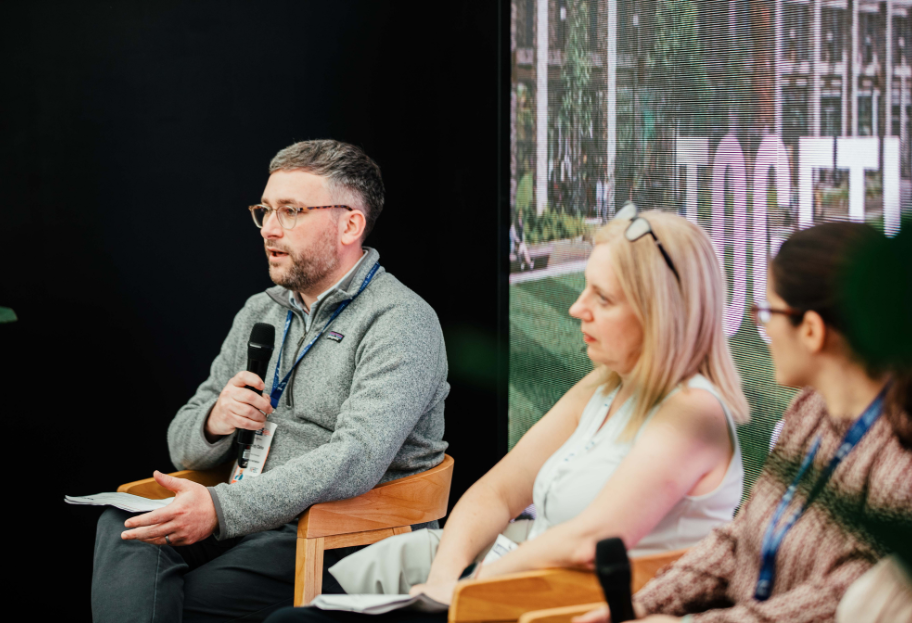
One of the clearest themes was collaboration. Without support, understanding, and communication between local authorities, investors, developers, community organisations and delivery partners, real impact can be created by working together earlier and more transparently. At our panel hosted by Caddick and Moda, ‘From Bricks to Mortar: How Major Regeneration Can Tackle the NEET Challenge’, panellists shared how social value initiatives can be an effective tool to tackle one of the biggest challenges that threatens losing a generation to unemployment.
Alan Milburn’s interim report into youth unemployment, released yesterday, suggests that up to 1.25 million young people will be ‘not in employment, education or training’ (NEET) by 2031 unless action is taken. However, regeneration schemes offer unique opportunities to engage young people with the places and spaces in their local area from early-on in their careers. One panellist noted that, depending on the length of a regeneration scheme, which can be upwards of 10 to 20 years in some cases, young people could start their careers as apprentices and progress to successful and rewarding careers working on different phases of the same scheme for years.
Panellists also highlighted collaboration as essential to successful placemaking, particularly when shaping places that are resilient, trusted and genuinely reflective of local need. From initial planning through to construction, fit-out and long-term stewardship of the area, collaboration is key to ensure that schemes serve the communities in which they are developed, as well as stakeholders, with local organisations perfectly placed to ensure that communities are brought along on the journey, helping to foster pride of place and ownership of new schemes. This community engagement should include young people as the future residents, users and workforce of these places and spaces.
UKREiiF has shown that if social value is embedded from the outset, regeneration can transform places, spaces and outcomes for communities. For developers, investors and local partners alike, the challenge now is to turn ambition into action and ensure that the communities, including young people, at the heart of regeneration share in its success.